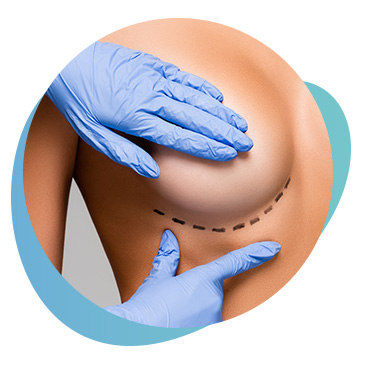
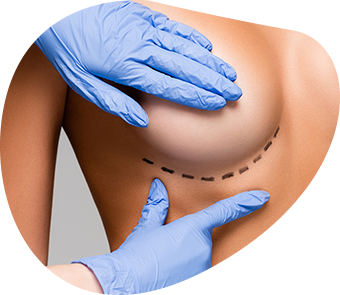
Rebuilding your breast after a mastectomy is one of the most personal decisions in your cancer journey — and you deserve a surgeon who treats it that way. At her Chandler office, double board-certified plastic surgeon Dr. Rimma Finkel helps women throughout the East Valley understand every reconstruction option available to them, from implant-based techniques to flap procedures using their own tissue.
Whether you are planning ahead of an upcoming mastectomy or exploring reconstruction months or years later, Dr. Finkel will build a surgical plan around your body, your health history, and your goals. Call our Chandler office today to schedule a one-on-one consultation.
BREAST RECONSTRUCTION 101
Breast reconstruction is surgery to rebuild the shape, contour, and (if desired) the nipple and areola of a breast after mastectomy or lumpectomy. Some women choose reconstruction immediately during their cancer-removal surgery, while others prefer to wait until they’ve finished chemotherapy or radiation, or even years down the road. There is no single right timeline — only what feels right for your body and your recovery.
Under the Women’s Health and Cancer Rights Act, most health insurance plans that cover mastectomy are required to also cover breast reconstruction and procedures to achieve symmetry, including on the opposite breast. Dr. Finkel’s Chandler office can help you understand what your specific plan covers before you commit to a surgical plan.
Reconstruction is always optional. Some patients choose to forgo it entirely, others opt for a flat closure, and many pursue full reconstruction. Whatever direction feels right to you, Dr. Finkel is here to give you honest, unhurried guidance.
Our Chandler office is located at 1727 W. Frye Rd., Suite 250, Chandler, AZ 85224 — easily accessible for patients throughout Chandler, Gilbert, Mesa, Tempe, and the greater East Valley. Call (480) 963-3034 to ask about scheduling, insurance coverage, or what to bring to your first visit.
YOUR RECONSTRUCTION OPTIONS
Dr. Finkel performs the full range of breast reconstruction techniques, and will help you weigh the pros and cons of each based on your anatomy, prior treatment, and lifestyle.
The most common approach starts with a tissue expander, placed either under or over the chest muscle, that is gradually filled over several weeks or months to stretch the skin and muscle. Once the desired size is reached, the expander is exchanged for a permanent saline or silicone implant.
Flap reconstruction uses your own skin, fat, and sometimes muscle — most often from the abdomen (TRAM flap) or back (latissimus dorsi flap) — to rebuild the breast mound. Because it uses your own tissue, the results can look and feel more natural over time, though recovery is generally longer than implant-based reconstruction.
Traditional subpectoral reconstruction places the implant beneath the chest muscle, while newer prepectoral techniques place it above the muscle. Prepectoral reconstruction is less invasive and often means a shorter, more comfortable recovery, but it isn’t the right fit for every patient. Dr. Finkel will help determine which placement suits your body.
Once the breast mound has healed, many women choose to complete their reconstruction with nipple and areola reconstruction — typically a straightforward outpatient procedure.
Fat grafting transfers a patient’s own fat from areas like the abdomen or thighs to refine the shape and contour of the reconstructed breast, smoothing out irregularities for a more natural result.
Your journey starts with an unhurried, one-on-one conversation with Dr. Finkel about your diagnosis, your health history, and what matters most to you. She’ll walk you through which reconstruction techniques are realistic options for your body, whether immediate or delayed reconstruction makes more sense for your treatment plan, and what results you can reasonably expect.
Some women choose immediate reconstruction, performed during the same surgery as their mastectomy, to wake up with a breast contour already in place. Others choose delayed reconstruction, waiting until after chemotherapy, radiation, or simply until they feel ready. Both approaches are medically sound; the right choice depends on your cancer treatment plan and personal preference.
Most reconstructive procedures are performed in a hospital setting under general anesthesia, with an overnight stay or short hospitalization depending on the technique used. Dr. Finkel and her team will walk you through exactly what to expect before, during, and immediately after surgery.
Recovery varies by procedure. Implant-based reconstruction patients often feel significantly better within one to two weeks, while flap reconstruction — which involves surgery at a donor site as well — typically requires four to six weeks before returning to normal activity. Additional procedures, such as nipple reconstruction or fat grafting touch-ups, are usually scheduled months later, once your body has fully healed.
As one of the few female plastic surgeons in the greater Phoenix area, Dr. Finkel brings a unique, empathetic perspective to reconstructive care. She and her Chandler team remain available throughout your recovery to answer questions, address concerns, and adjust your plan as needed.
It depends on your treatment plan and personal preference. Many women choose immediate reconstruction during the same surgery as their mastectomy, while others wait until after chemotherapy or radiation, or pursue reconstruction months or even years later. There’s no deadline — Dr. Finkel will help you decide what timing makes sense for you.
Recovery depends on the technique used. Implant-based reconstruction patients often feel noticeably better within one to two weeks, while flap reconstruction typically requires four to six weeks of recovery since it involves a donor site as well. Most patients need several months before reconstruction is fully complete, especially if additional procedures like nipple reconstruction are planned.
Under federal law, most health plans that cover mastectomy must also cover reconstruction and procedures needed to achieve symmetry. Coverage details vary by plan, so our Chandler office can help you verify your specific benefits before scheduling surgery.
Implant-based reconstruction uses a tissue expander followed by a permanent saline or silicone implant, while flap reconstruction uses your own tissue — typically from the abdomen or back — to rebuild the breast. Implants generally mean a shorter initial recovery, while flap procedures often provide a more natural, lasting result since they use your own tissue.
You will have some discomfort after any of these procedures, but it’s manageable with medication and typically improves significantly within the first couple of weeks. Flap procedures tend to involve more initial discomfort than implant-based reconstruction because they involve a second surgical site.
No. Reconstruction is always optional. Some women choose a flat closure instead, and that decision is just as valid as choosing reconstruction. Dr. Finkel supports whichever path helps you feel most confident and at peace with your body.
Look for a board-certified plastic surgeon with specific experience in breast reconstruction, and don’t hesitate to ask about her training, how many reconstructive procedures she performs, and her approach to complications. Reading patient reviews can also help you gauge what to expect from her care and her team.
Dr. Rimma Finkel is a double board-certified plastic surgeon who has dedicated much of her practice to helping women navigate breast reconstruction after mastectomy or lumpectomy. As one of the few female plastic surgeons in the greater Phoenix area, she brings a perspective to this work that many patients find puts them immediately at ease.
Every consultation with Dr. Finkel is relaxed, unhurried, and centered on your questions — not a sales pitch. She’ll walk you through your realistic options, answer the questions you may feel hesitant to ask, and build a plan that reflects your body, your treatment history, and your goals.
“Confidence is at the center of how we present ourselves to the world. A breast reconstruction procedure that addresses a source of insecurity can be the first step toward feeling like yourself again — and I’m honored to help my patients get there.” — Dr. Rimma Finkel
Dr. Finkel sees patients at two convenient Valley locations, including her Chandler office at 1727 W. Frye Rd., Suite 250, serving women throughout Chandler, Gilbert, Mesa, Tempe, and the surrounding East Valley.
Whether you’re planning ahead of a mastectomy or exploring your options months or years later, Dr. Rimma Finkel and her Chandler team are here to answer your questions with honesty and compassion. Call (480) 963-3034 or request a consultation online to get started.
1727 W. Frye Rd. Suite 250
Chandler, AZ 85224
20033 N 19th Ave Suite 108
Phoenix, AZ 85027