
What Is Prepectoral Breast Reconstruction, and Who Is a Candidate for Conversion?
Prepectoral reconstruction places a breast implant above the chest (pectoralis major) muscle. The implant sits directly beneath the skin and tissue that remain after mastectomy, rather than under the muscle. Some women who already have under-the-muscle implants ask about converting to prepectoral placement. Whether that makes sense depends on their tissue, their treatment history and their personal goals.
I am Dr. Rimma Finkel, a Double Board Certified plastic surgeon, and I have been performing breast reconstruction since 2008. Many of the women I meet at my Chandler and Phoenix offices have already been through so much. They want clear, honest information before they decide anything. This guide explains the difference between the two implant positions, what a conversion generally involves and the factors that help determine candidacy. It is general education and not a substitute for a personal evaluation.
Prepectoral vs. Subpectoral Implant Placement: What’s the Difference?
The difference comes down to where the implant or tissue expander sits in relation to the pectoralis major, the large muscle across the front of the chest.
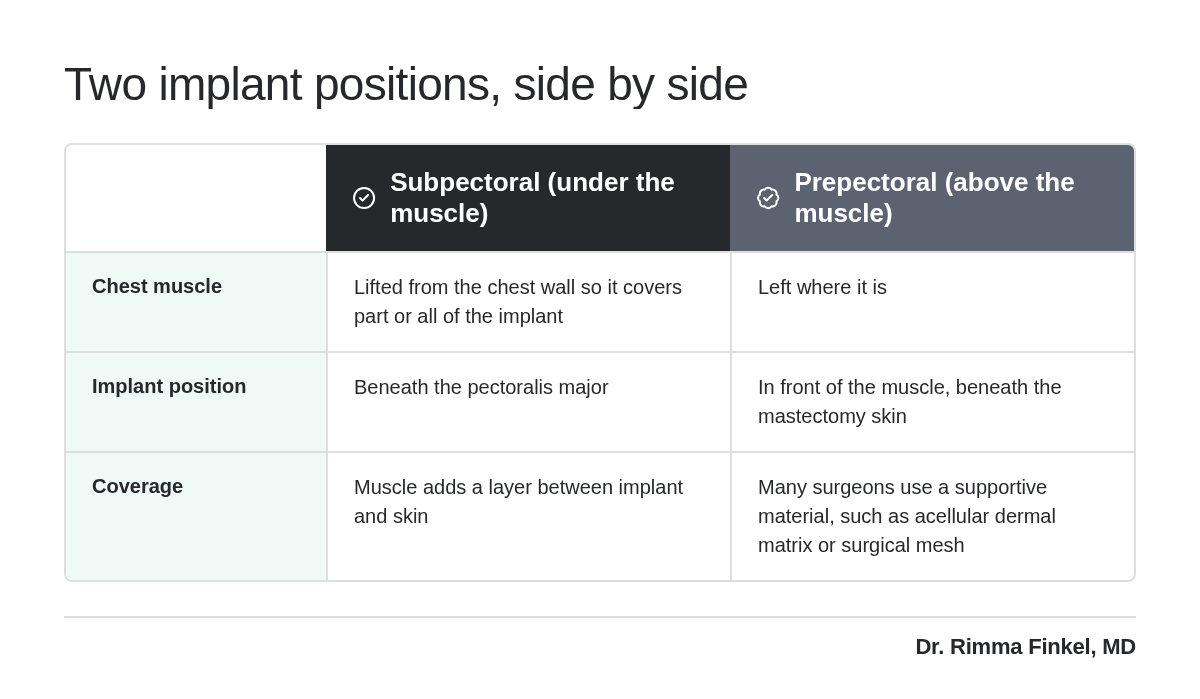
Subpectoral (under-the-muscle) placement. The muscle is lifted from the chest wall so that it covers part or all of the implant. For many years this was a common approach because the muscle adds a layer of coverage between the implant and the skin.
Prepectoral (above-the-muscle) placement. The muscle is left where it is, and the implant sits in front of it, beneath the mastectomy skin. Many surgeons use a supportive material, such as acellular dermal matrix or a surgical mesh, to help hold the implant in position. Your surgeon will explain whether that applies to you.
Neither position is right for everyone. The choice depends on the individual patient and is something to talk through in a consultation. For an overview of implant and flap options, see our page on breast reconstruction in Scottsdale or breast reconstruction in Phoenix.
What Potential Benefits Do Patients Ask About?
Women who are researching prepectoral reconstruction usually arrive with a few specific questions.
- Muscle movement. With under-the-muscle implants, some patients notice the breast shifting or changing shape when they flex their chest, such as when lifting, pushing or exercising. This is often called animation deformity. Because a prepectoral implant sits in front of the muscle, many patients ask whether placing it there may reduce that movement.
- Tightness or pulling. Some women describe a tight or pulling sensation they connect with the muscle. They want to know whether changing the implant position could help.
- Leaving the muscle in place. Some patients simply prefer that their chest muscle not be lifted.
There are trade-offs to discuss as well. With less tissue over the implant, some patients may be able to see or feel the implant’s edges or rippling, depending on how much soft tissue they have. Fat grafting in breast reconstruction is sometimes discussed as a way to add a layer of coverage.
These are discussion points, not promises. Every body and every treatment history is different.
Converting from Under-the-Muscle to Prepectoral Reconstruction
A conversion moves an existing implant reconstruction from beneath the muscle to above it. In general terms, the steps are:
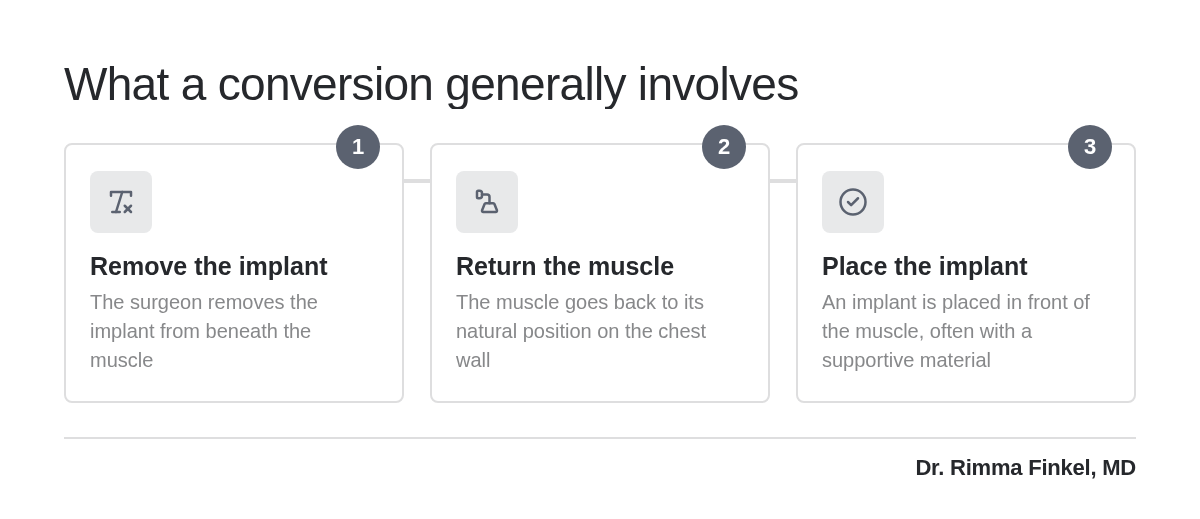
- The surgeon removes the implant from beneath the muscle.
- The muscle is returned to its natural position on the chest wall.
- An implant is placed in front of the muscle, often with a supportive material to help hold it in place.
The surgeon will discuss whether you keep your current implant or receive a new one.
Conversion is sometimes combined with other revision steps. Examples include addressing scar tissue that has formed around the implant (the capsule), exchanging the implant, or fat grafting to add soft tissue coverage.
Women ask about conversion for different reasons. These include visible movement when the chest muscle flexes, discomfort they associate with the muscle, changes in implant position over time, or wanting to revisit their reconstruction years after their original surgery. Because the reasons vary, the plan is always individual.
Who May Be a Candidate for Prepectoral Conversion?
No article can tell you whether you are a candidate. These are the factors a plastic surgeon typically weighs:
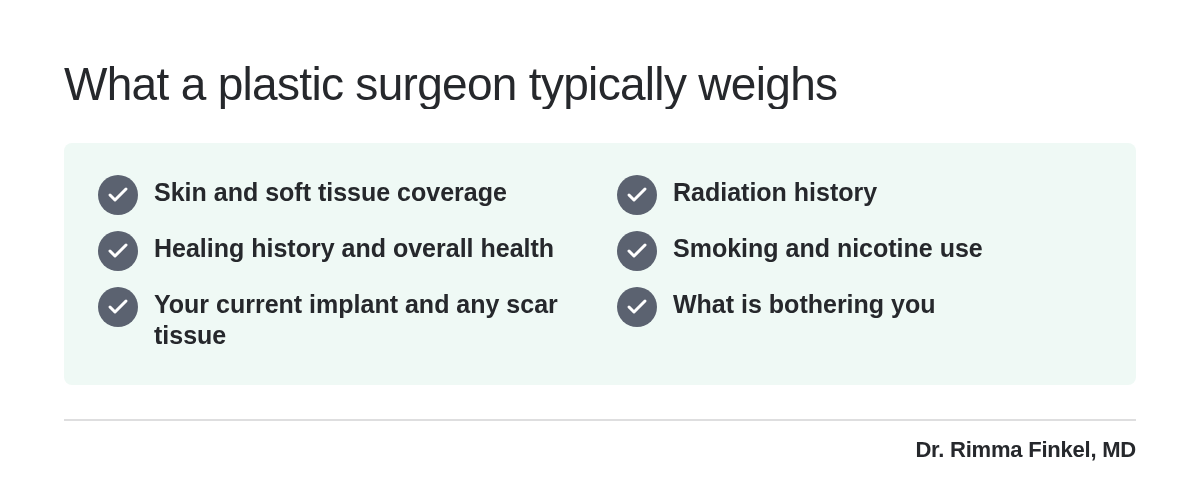
- Skin and soft tissue coverage. This is often the central question. Without the muscle in front of the implant, the skin and tissue over the chest need to be healthy enough to cover it well.
- Radiation history. Radiation can change how skin and tissue heal, so your treatment history matters.
- Healing history and overall health. This includes how you healed after earlier surgeries and any other medical conditions.
- Smoking and nicotine use. These can affect healing, so your surgeon will ask about them.
- Your current implant. Its condition, its position and any scar tissue around it.
- What is bothering you. Your own goals and concerns guide the conversation.
A simple way to think about it: if your main concern is movement or tightness tied to the chest muscle, and your skin and soft tissue coverage are healthy, conversion is worth asking about. If your tissue is thin, you have had radiation, or your concern is something different, other approaches may be part of the discussion instead. These could include fat grafting, an implant exchange or flap reconstruction.
In general, a plastic surgeon evaluating conversion will review your medical and treatment history, examine the chest skin and soft tissue, and ask what you would like to change before recommending whether conversion is a reasonable option for you.
What Is Recovery Like After Conversion?
Recovery is individual, and your surgeon will give you instructions specific to your procedure. In general terms, many patients move through stages like these:
- Right after surgery. You go home with dressings and often a supportive surgical bra. Some patients have drains.
- Early recovery. This is a period of rest, with help at home and limits on arm movement and lifting, as directed.
- Follow-up visits. These let your surgeon check healing and decide when it is appropriate to resume activities.
- Gradual return to normal routines. Exercise and lifting are added back only once your surgeon clears them.
Swelling is common after surgery and settles over time. Ask your surgeon what to expect at each stage and whom to call with questions.
Talking Through Your Options
Reconstruction decisions are personal. I believe education should always come before any decision. Every procedure in my practice starts with a one-on-one consultation with me, in a relaxed, worry-free environment where you can ask everything on your mind. As a female plastic surgeon who has been performing breast reconstruction since 2008, I understand how much these choices mean. I want to help you be who you were before, and your safety and comfort will always be my first priority.
Many women searching for prepectoral conversion in Phoenix or Scottsdale simply want to understand their reconstruction options before committing to anything. My offices are in Chandler and Phoenix, and a breast reconstruction consultation is a good place to bring your questions about implant position.
If you would like to read more first, you can request our free downloadable ‘Complete Guide to Understanding Breast Reconstruction’ and explore the practice from the Dr. Rimma Finkel, MD home page. When you are ready, call (480) 963-3034 to arrange a visit at our Chandler or Phoenix office.
Frequently Asked Questions
Is prepectoral reconstruction right for everyone?
No. Prepectoral placement depends heavily on the health and thickness of the skin and soft tissue over the chest, along with your treatment history and goals. For some women, under-the-muscle placement, fat grafting or flap reconstruction may be a better fit. A one-on-one consultation is the way to find out.
Can I convert to prepectoral if I had radiation?
Radiation history is one of the factors your plastic surgeon will weigh, because radiation can affect how skin and tissue heal. It does not automatically answer the question either way. Bring your treatment records to your consultation so your surgeon can review them.
Will I need a new implant if I convert?
Not necessarily. Whether your current implant is reused or replaced depends on its condition, its size and your goals. Your surgeon will discuss this during planning.
How do I find out if I’m a candidate for prepectoral conversion?
A plastic surgeon typically reviews your medical and treatment history, examines your reconstruction and the surrounding tissue, and talks through your goals before advising whether conversion is appropriate. At this practice, every procedure starts with a one-on-one consultation with Dr. Finkel, at offices in Chandler and Phoenix. Call (480) 963-3034 to schedule.
If you have questions about breast reconstruction, including prepectoral implant placement, a one-on-one consultation is a comfortable place to start. Call (480) 963-3034 to schedule an appointment at our Chandler or Phoenix office, or schedule an appointment through our website.
