
Implant vs. Flap Breast Reconstruction: How to Choose What’s Right for You
Choosing between implant and flap breast reconstruction depends on your body, your cancer treatment plan (especially whether radiation is involved) and what matters most to you in recovery and in the years ahead. Neither path is right for everyone. That is why I talk through both options with each patient in a one-on-one consultation before any decision is made.
I’m Dr. Rimma Finkel, a Double Board Certified female plastic surgeon. I have been performing breast reconstruction since 2008, and I see patients at my offices in Chandler and Phoenix. You can learn more about my practice on the Dr. Rimma Finkel, MD home page. I wrote this guide to help you walk into your consultation feeling informed rather than overwhelmed. It is general education, not medical advice for your situation. Your own plan should always come from a conversation with your care team.
Implant vs Flap Breast Reconstruction: Two Paths
When patients ask me about implant vs flap breast reconstruction, I start by explaining that these are two different ways of rebuilding the breast after mastectomy.
Implant-based reconstruction uses a breast implant to create the breast shape. It often begins with a temporary tissue expander.
Flap reconstruction, sometimes called autologous reconstruction, uses your own skin and fat (and sometimes muscle) moved from another part of your body, such as the abdomen, back or thighs.
Some patients have a combination of the two. Others later have refinements such as fat grafting or nipple reconstruction. Reconstruction can sometimes begin at the time of mastectomy or be delayed until later, depending on your treatment plan. Either way, it is coordinated with your breast surgeon and oncology team.
If you live in the East Valley, you can read more about breast reconstruction in Chandler or breast reconstruction in Phoenix. Patients coming from the Scottsdale area can find information on breast reconstruction for Scottsdale patients.
How Does Implant Reconstruction with Expanders Work?
In many cases, implant reconstruction happens in stages.
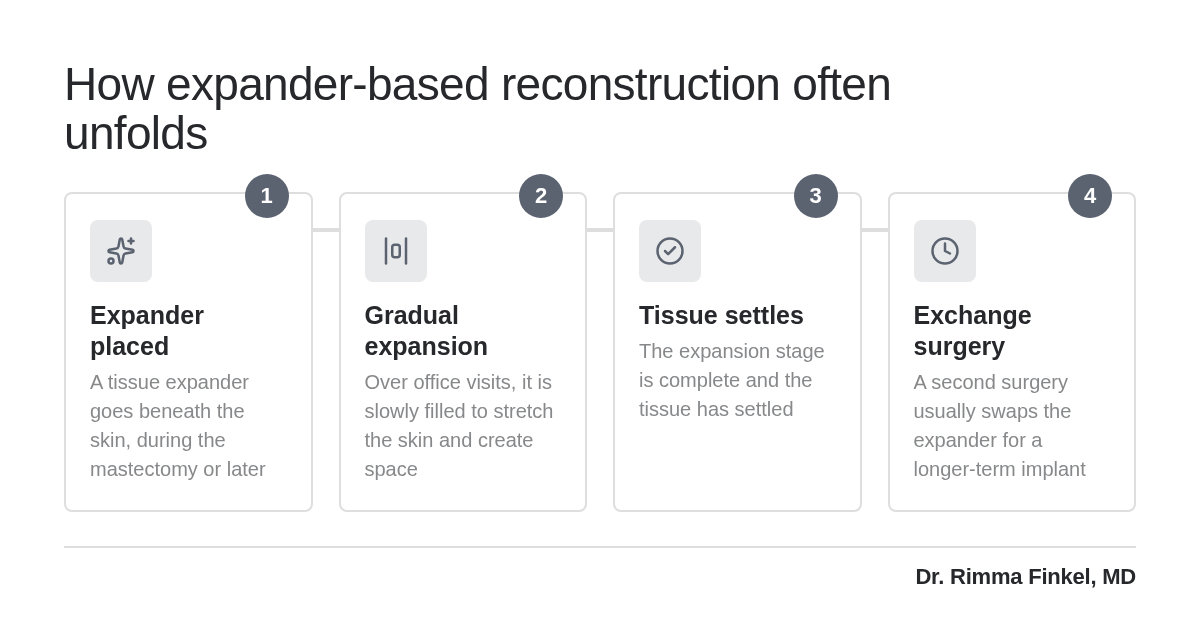
First, a tissue expander is placed beneath the skin, and sometimes beneath the chest muscle, either during the mastectomy or later. An expander is a temporary, adjustable device. Over a series of office visits, it is gradually filled to stretch the skin and create space.
Once the expansion stage is complete and the tissue has settled, a second surgery is usually done to exchange the expander for a longer-term implant.
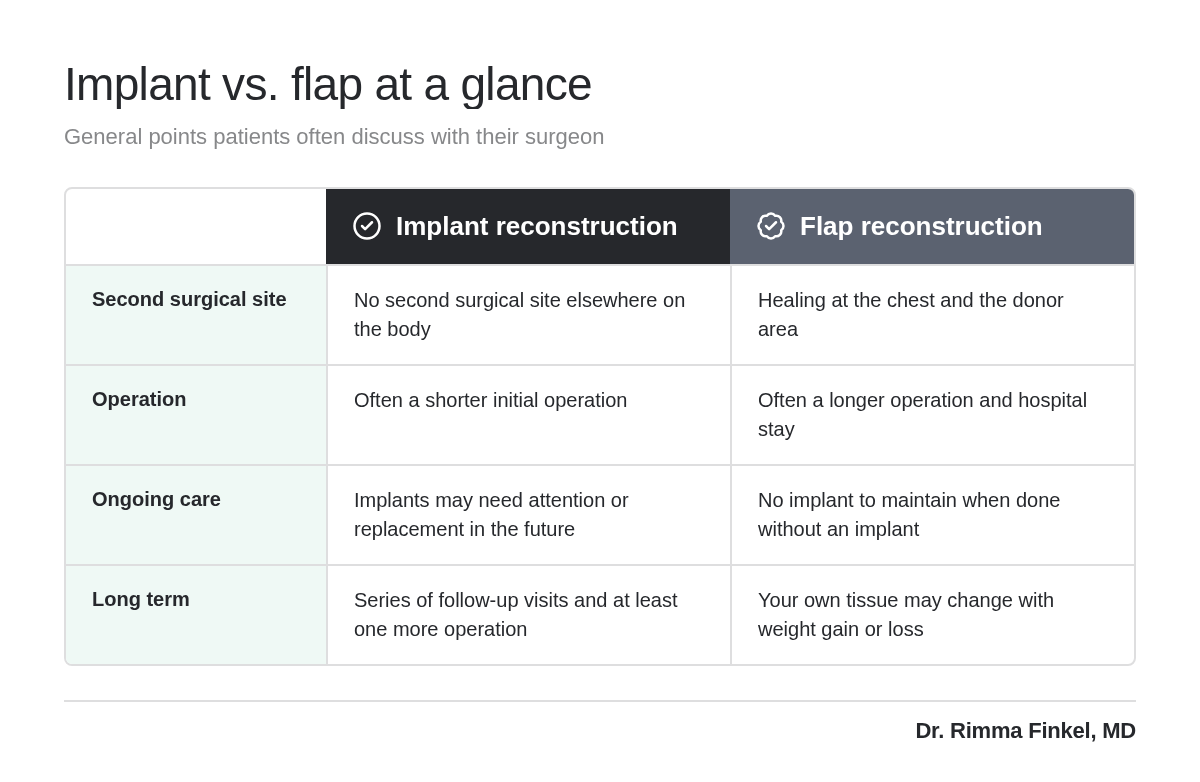
Patients often consider implants because there is no second surgical site elsewhere on the body. The trade-off is a series of follow-up visits and at least one more operation. Implants are also medical devices that may need attention or replacement at some point in the future, and your surgeon will discuss what that can look like over time.
How Does Flap Reconstruction Work?
Flap reconstruction moves tissue from a donor area of your body to the chest to rebuild the breast.
In some flap techniques, the tissue stays connected to its original blood supply and is moved into place. In others, called free flaps, the tissue is fully detached and its small blood vessels are reconnected in the chest using microsurgery.
Because the reconstruction is made from your own tissue, when flap reconstruction is performed without an implant, there is no implant to maintain. Patients often weigh that benefit against a longer operation and healing at two sites: the chest and the donor area.
Your own tissue also tends to change along with the rest of your body, for example with weight gain or loss. That is worth discussing as you think long term.
How Do Radiation and Body Type Affect the Choice?
Two factors often shape the conversation more than anything else.
Radiation. Radiation therapy can change how the skin and underlying tissue behave. It may make the tissue less able to stretch, which matters for expanders and implants. If radiation is part of your plan, or you have had it in the past, it affects the timing and type of reconstruction we discuss. Many patients in this situation talk with their surgeon about whether using their own tissue should be considered.
Body type and health history. Flap reconstruction needs enough donor tissue. Very slim patients may have less available, and previous abdominal surgeries can affect which donor sites are an option. General health factors such as smoking, diabetes and other medical conditions are also part of the discussion for either approach. So is whether you are reconstructing one breast or both.
Here is a simple way to start organizing your thoughts:
- If radiation is likely or has already happened, raise it early and ask how it changes each option.
- If avoiding a second surgical site matters most to you, ask whether implant reconstruction fits your situation.
- If you would prefer not to have an implant, ask whether you have suitable donor tissue for a flap.
This is not a substitute for an exam, but it can make your consultation more focused.
What Are the Recovery Differences?
Recovery is personal, and your surgeon will give you guidance specific to your procedure. In general terms:
- Implant reconstruction often involves a shorter initial operation. Recovery then continues across the expansion visits and the later exchange surgery.
- Flap reconstruction often involves a longer operation and hospital stay. You are healing at both the chest and the donor site, so many patients plan for more help at home early on. There may still be smaller follow-up procedures later.
With either path, planning ahead helps: arranging rides, help with household tasks, and time away from work or lifting. Your safety and comfort will always be my first priority, and we will talk through what to expect at each stage before surgery.
Questions to Bring to Your Consultation
Every procedure in my practice starts with a one-on-one consultation with me. I want you to leave that visit understanding your options, not feeling rushed. These questions can help:
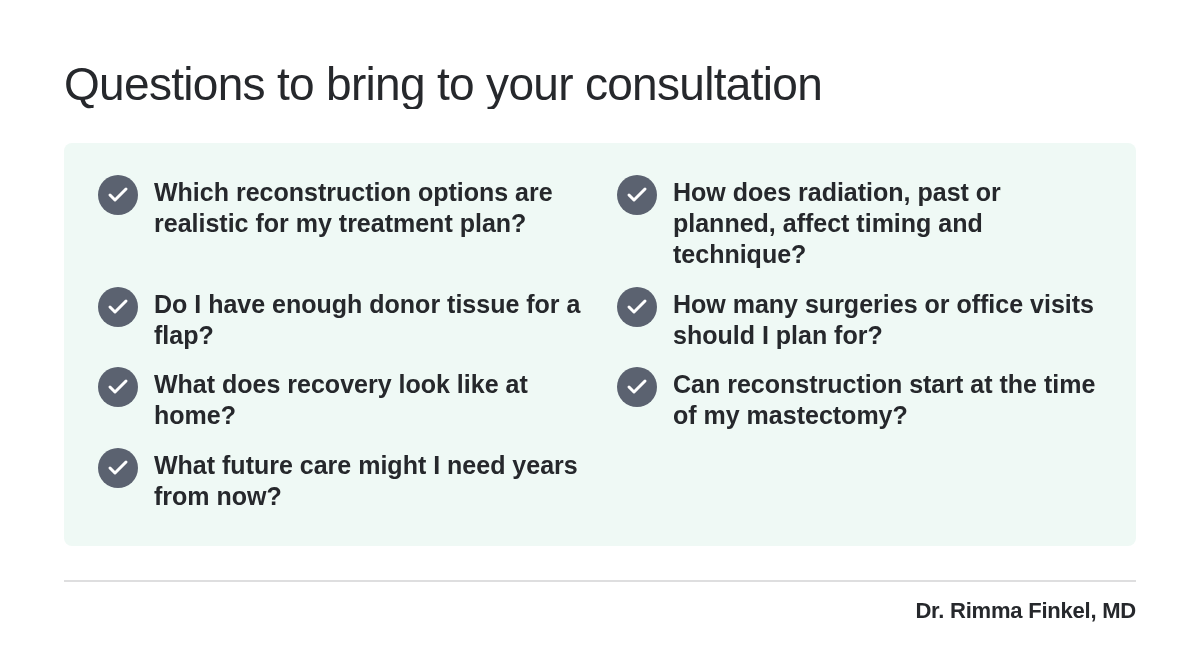
- Based on my treatment plan, which reconstruction options are realistic for me?
- How does radiation, past or planned, affect timing and technique?
- Do I have enough donor tissue for a flap, and which donor site would you consider?
- How many surgeries or office visits should I plan for with each option?
- What does recovery look like at home, and when can I return to my normal activities?
- Can reconstruction start at the time of my mastectomy, or should it wait?
- What future care might I need years from now?
If you would like to read more before your visit, my free downloadable Complete Guide to Understanding Breast Reconstruction walks through these topics in more depth.
When you’re ready, call (480) 963-3034 to schedule an appointment at my Chandler or Phoenix office. I am here to help you feel like yourself again.
Frequently Asked Questions
Is implant or flap reconstruction the better choice?
Neither option is better for everyone. The right choice depends on your anatomy, your cancer treatment (especially radiation), your health history and your personal priorities. Your surgeon will go over both options with you during a consultation.
Will I need more than one surgery?
Often, yes. Expander-based implant reconstruction usually involves a second surgery to place the implant. Both approaches may include later refinements such as fat grafting or nipple reconstruction. Your surgeon will outline the expected stages for your plan.
Can reconstruction be done at the same time as my mastectomy?
In some cases reconstruction can begin during the mastectomy, and in others it is delayed. The timing depends on your treatment plan and is coordinated with your breast surgeon and oncology team.
Do I have to have reconstruction at all?
No. Reconstruction is a personal choice, and some patients decide not to have it. A consultation is a place to learn about your options, not a commitment to surgery.
Ready to talk through your options? Call (480) 963-3034 to schedule an appointment for a one-on-one consultation at our Chandler or Phoenix office.
