
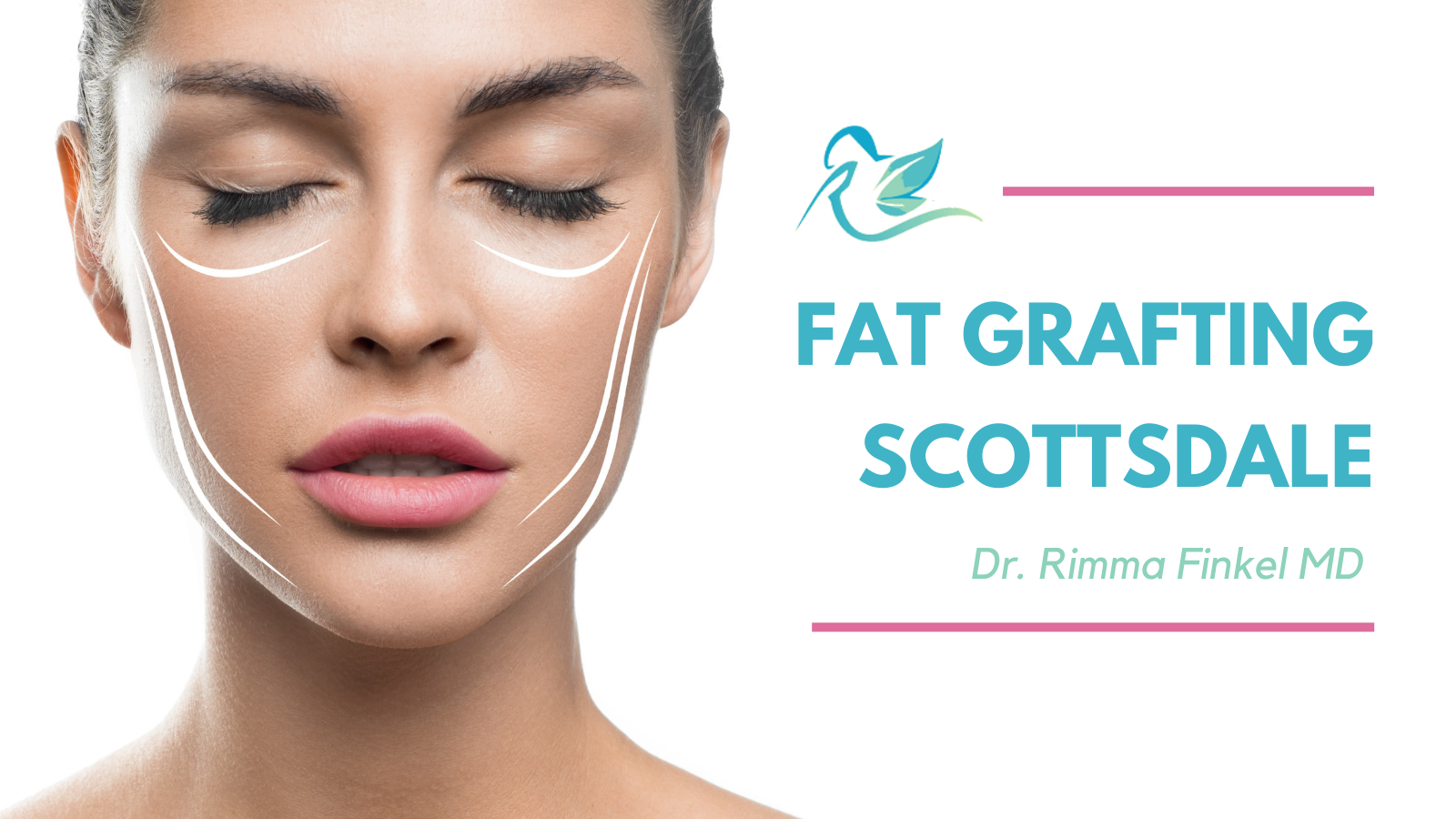
Over the last two decades, fat grafting has become a popular treatment option for those looking to enhance certain areas of their body. Fat grafting in Scottsdale (which is also known as fat transfer, fat injections, or lipofilling, depending on the treatment area) is the process by which fat is transferred from one area of the body to another. Most commonly, fat is removed from the belly, thighs, or buttocks and transferred to other areas like the face, hands, or breasts.
Fat grafting is a fairly simple process that gives many patients natural and long-lasting results. If you’re considering this procedure, feel free to call the office of Dr. Rimma Finkel at (480) 963-3034. We are happy to answer your questions and give you the best options for fat grafting in Scottsdale.
It may seem hard to believe that fat from one area of your body can be used in another area. Yet since the 1990s, fat grafting has become a popular procedure to enhance certain areas of the face and body, such as the cheeks, hands, breasts, buttocks, feet, and hips. Even more recently, some clinicians have used the therapeutic benefits of fat grafting to help heal wounds and scars. Essentially, fat grafting involves removing fat from an unwanted area and re-injecting it into an area that you would like to enhance. Many people use fat grafting to fill in sunken skin around their cheekbones and hands, but it can also be used to increase your natural curves when diet and exercise just aren’t enough to reach your goals.
During fat grafting, fat is removed from unwanted areas by way of liposuction. From there, the fat is purified and injected into the desired area. Most commonly, people opt to have excess fat removed from their belly, thighs, hips, or buttocks. However, you should know that fat can be removed from anywhere on the body that has excess fat (so long as it hasn’t been removed from that spot before). Your chosen area should contain a larger quantity of softer fat, and you’ll want to choose an area that will look noticeably smaller when the fat is removed (such as the abdomen or thighs).
Additional Reading: What is Fat Grafting?
In addition to improving the appearance of one’s face or hands, fat grafting is also commonly used as part of breast reconstruction procedures. The process is generally the same: fat is removed from one area via liposuction and injected into the breast area to recreate the breast. Lipofilling, which is another type form of fat grafting, is also used to fix minor differences in the shape, size, and position of the reconstructed breast so that it more closely resembles the other breast.
Fat grafting is a viable option for breast reconstruction, and many women undergo this procedure every year. Be sure to talk with your surgeon to find out what breast reconstruction procedure is best for you.
There are three main steps in the fat grafting process:
In the first step, your surgeon will use liposuction techniques to remove unwanted fat from your chosen area. Liposuction is minimally invasive and typically does not leave obvious scars. From there, the fat is processed to separate debris, excess fluid, and dead cells from the viable fat cells. The fat can also be processed by washing it in a sterile saline solution. Some fat cells may be discarded if they are unlikely to survive the graft. Fat is then re-injected in small droplets to ensure that each cell has a good blood supply so it can survive the graft.
The amount of fat removed (measured in cc’s) depends on the individual and the specific area you are targeting.
Fat grafting can be used to enhance several areas throughout the body. Here are the most common areas people choose to have this procedure.
If you are considering fat grafting for rejuvenation or reconstructive purposes, it’s in your best interest to learn about the pros and cons of this procedure.
Be sure to talk with your surgeon about any concerns you have regarding the procedure. An experienced surgeon will always outline the benefits and risks associated with these procedures.
Every patient is different, and recovery time will vary based on the type of fat grafting procedure you have done. You may feel some post-operation discomfort for 1-2 days while the swelling reduces. The rest of the swelling should disappear in about a week, but this will depend on the complexity of the procedure. You can resume light activity within a couple of days of the procedure, but refrain from strenuous activity for about a week.
Patients of any age can undergo a fat grafting procedure if they wish to give themselves a refreshed look. If you are in your 50s and 60s, facial fat grafting is best combined with an additional procedure, such as a face or neck lift, to maximize the results.
Fat grafting can produce results that last many years—and in some cases, even a lifetime! Keep in mind that about 40-50% of the fat cells will survive long term, so you may need several treatments to maintain the results you are looking for.
Because fat grafting is minimally invasive, pain is minimal. For smaller procedures, surgeons use a local anesthetic often coupled with a light oral sedation to help you feel relaxed during the procedure. Fat grafting itself does not leave a scar, but there might be a tiny scar at the site of liposuction. However, these scars are not visible unless one looks very closely.
Our appearance has a huge impact on our self-confidence. Dr. Finkel believes that everyone deserves to feel beautiful in the skin they are in, and that sometimes little enhancements are all we need to regain our confidence. If you are looking to smooth out areas with unwanted fat and rejuvenate other parts of your body, fat grafting may be able to help you achieve these goals.
Dr. Rimma Finkel is a double-board certified plastic surgeon serving patients throughout the Greater Phoenix area. She has over 10 years of experience performing reconstructive and aesthetic procedures to help her clients look and feel their best. See for yourself why patients across trust Dr. Finkel for the best fat grafting Scottsdale has to offer. Click here to read her 5-star reviews!
Whether you are looking to enhance your body or undergo a more thorough reconstructive procedure, Dr. Finkel offers a variety of procedures to fit your needs. Aesthetic procedures (also known as cosmetic surgery) seek to enhance or improve certain areas of the body. Reconstructive procedures, on the other hand, seek to restore the functionality of certain body parts. Below is a list of Dr. Finkel’s reconstructive and aesthetic procedures.
If you have questions about these procedures, please feel free to call Dr. Finkel’s office at (480) 963-3034. You can also contact us online to schedule your consultation. We look forward to helping you achieve your goals!
