Immediate Breast Reconstruction: Pros and Cons of Reconstruction at the Time of Mastectomy
When you weigh immediate breast reconstruction pros and cons, here is the short answer. Reconstruction at the time of mastectomy may mean fewer separate surgeries and waking up with a breast shape. It also means a longer first operation and making big decisions soon after a diagnosis. Whether it fits you depends on your cancer treatment plan, your health and how ready you feel. Immediate, delayed and staged reconstruction are all valid paths, and you are allowed to take time to decide.
I’m Dr. Rimma Finkel, a Double Board Certified Plastic Surgeon with offices in Chandler and Phoenix, and I have been performing breast reconstruction since 2008. I want to walk you through these trade-offs the way I would in a one-on-one consultation: calmly, honestly and without pressure.
Please keep in mind that this article is general education, not medical advice. Your own care team will make the medical recommendations for you.
What Does “Immediate” Breast Reconstruction Mean?
Immediate breast reconstruction after mastectomy means the rebuilding begins during the same operation in which the breast tissue is removed. Your breast surgeon (the oncologic surgeon) performs the mastectomy. I am the plastic and reconstructive surgeon who steps in afterward, under the same anesthesia, to begin rebuilding. I do not perform the mastectomy or your cancer treatment.
You will hear a few terms during this process:
- Skin envelope: the breast skin that remains after the tissue is removed. In a skin-sparing or nipple-sparing mastectomy, more of this skin may be preserved.
- Direct-to-implant: placing the final implant in the same surgery as the mastectomy, when your team feels that is appropriate.
- Tissue expander: a temporary, adjustable implant that is gradually filled over several visits to gently stretch the skin. It is later exchanged for a final implant or replaced by your own tissue.
- Flap: reconstruction that uses your own tissue, moved from another area of your body, such as the abdomen.
Delayed breast reconstruction begins months or even years after the mastectomy. You can compare implant and flap approaches on my breast reconstruction options page.
Immediate Breast Reconstruction Pros and Cons: The Possible Benefits
Every woman’s situation is different. Some patients value these benefits when reconstruction happens at the time of mastectomy:
- Fewer separate surgeries for some patients. The first stage of reconstruction happens alongside the mastectomy. This may reduce the number of separate operations and anesthesia events.
- Waking up with a breast contour instead of a flat chest. For many women, this emotional benefit matters a great deal. I want to help you be who you were before, and for some patients that feeling starts on the first day.
- Working with your own skin envelope. When a skin-sparing or nipple-sparing mastectomy is an option, your own skin may be preserved and used. That means working with the tissue before time or radiation changes it.
- A single initial recovery, instead of returning later to start reconstruction from the beginning.
Potential benefits vary with your treatment plan and individual circumstances. My goal is a natural-looking, aesthetically pleasing result, and your care team will help you weigh whether these benefits apply to you.
The Cons and Trade-Offs to Consider
Immediate reconstruction is not the right fit for everyone. The trade-offs may include:
- A longer first operation and initial recovery than a mastectomy alone. My breast reconstruction recovery timeline explains the general phases of healing.
- Big decisions soon after a diagnosis. Some women feel rushed to choose a reconstruction approach while they are still absorbing the news. That feeling is completely understandable.
- Coordination with your other treatments. Your incisions need to heal before some treatments that follow surgery can begin. Your oncology team has to be part of the plan from the start.
- More procedures may still follow. Many reconstructions involve later steps, such as an expander exchange, refinements or nipple reconstruction. “Immediate” rarely means “finished in one surgery.”
If you’d like to talk through how these trade-offs apply to you, you can schedule a one-on-one consultation or call my office at (480) 963-3034.
How Radiation and Cancer Treatment Affect Timing, and When Delayed Reconstruction May Fit
Radiation after a mastectomy can change how tissue behaves. It may affect a completed reconstruction, for example through firmness, changes in shape or problems with an implant. When radiation is possible, reconstruction is often planned around it.
Your team may suggest waiting if:
- radiation is likely to be part of your treatment
- you smoke
- you have significant medical conditions or health factors, such as obesity, that can affect healing
- you have a type of cancer, such as inflammatory breast cancer, where treatment needs to come first
- you simply aren’t emotionally ready to decide
Delayed breast reconstruction is not a lesser choice. It gives you time to finish treatment, heal and decide with a clear mind. Choosing not to have reconstruction at all is also a valid, personal decision.
The right timing depends on your treatment plan. To read more about when reconstruction can take place, see my article on how long after mastectomy breast reconstruction can be performed.
A Middle Path: Starting With a Tissue Expander
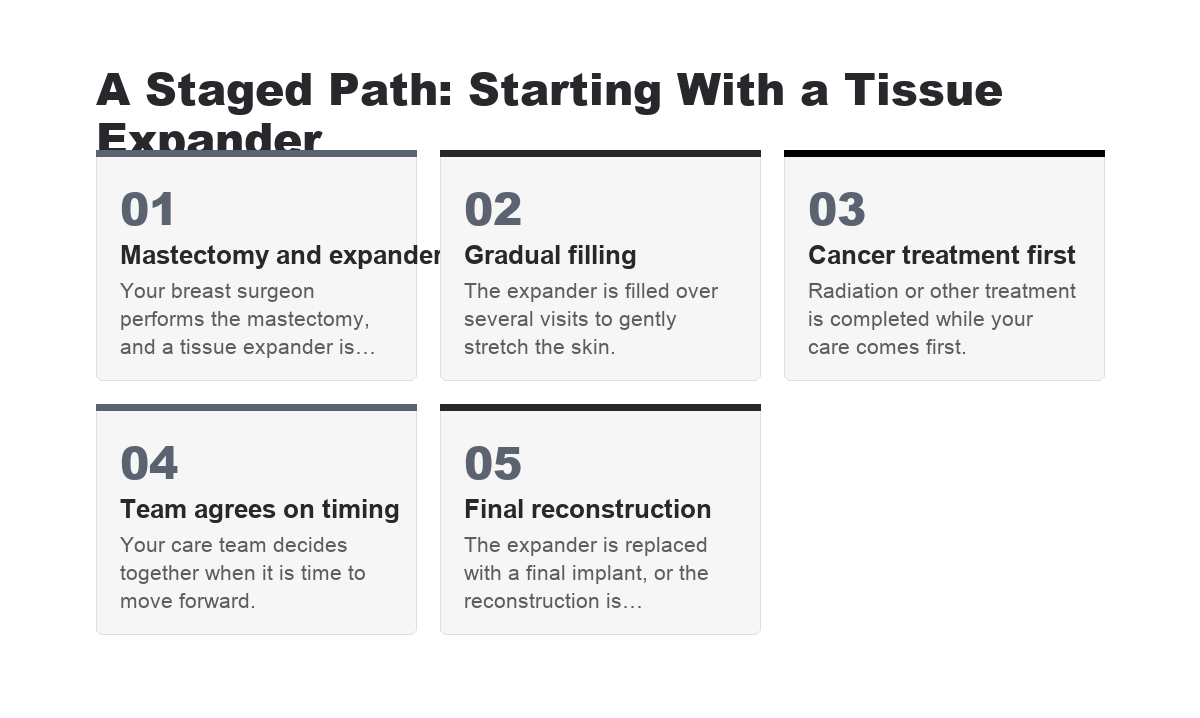
For some patients, a staged approach, sometimes called “delayed-immediate” reconstruction, may offer a balance between the two.
Here is how it works. A tissue expander is placed at the time of the mastectomy to help hold the skin envelope. Later, once radiation or other treatment is complete and your team agrees it is time, the expander is replaced with a final implant or the reconstruction is completed with a flap.
This path may help preserve your skin while still letting your cancer care come first. It can also give you more time to decide which final option feels right. You can learn more about tissue expander exchange surgery. To see how implant placement choices compare, read subpectoral vs. prepectoral breast reconstruction.
How Your Breast Surgeon and Plastic Surgeon Work Together
Several specialists share your care, and each has a distinct role:
- Your breast surgeon leads the cancer surgery.
- Your medical and radiation oncologists guide the treatments that come before or after it.
- As your plastic and reconstructive surgeon, I plan the rebuilding around that treatment, not the other way around.
Before surgery, your breast surgeon and I coordinate on questions such as:
- where the incisions will be placed
- whether skin or the nipple may be preserved
- whether radiation might be needed
- how much healing time other treatments will require
Your oncology team’s recommendations come first. Your safety and comfort will always be my first priority.
As a female plastic surgeon, I know how personal these conversations are. I try to keep them unhurried and to create a relaxed, worry-free environment where you can ask anything. I offer consultations at my offices for breast reconstruction in Phoenix and breast reconstruction in Chandler.
Questions to Ask at Your Consultation, and Making the Choice That Feels Right
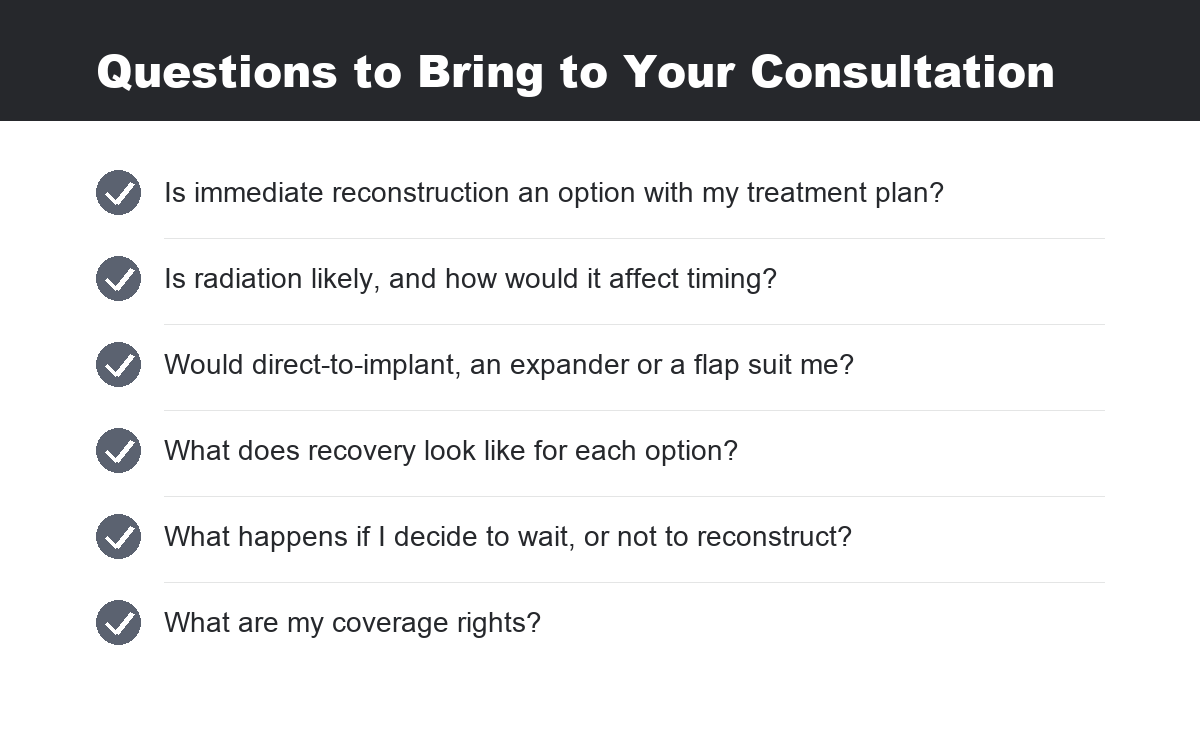
Bringing a short list of questions can make your visit feel less overwhelming. You might ask:
- Is immediate reconstruction an option with my treatment plan?
- Is radiation likely, and how would it affect the timing?
- Am I a candidate for a skin-sparing or nipple-sparing mastectomy? (Your breast surgeon can help answer this one.)
- Would direct-to-implant, a tissue expander or a flap make sense for me, and why?
- What does recovery generally look like for each option?
- What happens if I decide to wait, or decide not to reconstruct?
- What are my coverage rights? You can learn about your coverage rights before your visit.
There is no single right timing. Some women feel strongly about waking up with a breast shape. Others want to focus on treatment first and revisit reconstruction later. Both choices, and everything in between, deserve respect.
Every procedure in my practice starts with a one-on-one consultation with me. We talk through your options together, alongside the recommendations of your oncology team, so you can make a decision that feels right for you. If you’d like to read more first, my free downloadable ‘Complete Guide to Understanding Breast Reconstruction’ covers the basics in plain language.
Frequently Asked Questions
Do I have to decide about reconstruction before my mastectomy?
Only if you want immediate reconstruction, which does need to be planned before the mastectomy. Delayed reconstruction can begin months or years later, and some women choose not to reconstruct at all. You are allowed to take time to decide.
Does Dr. Finkel perform the mastectomy?
No. Your breast surgeon (the oncologic surgeon) performs the mastectomy and leads your cancer surgery. Dr. Finkel is the plastic and reconstructive surgeon who works alongside your breast surgeon and oncology team to plan and perform the reconstruction.
Does immediate reconstruction mean everything is done in one surgery?
Usually not. Many reconstructions involve later steps, such as a tissue expander exchange, refinements or nipple reconstruction. Your care team will explain what your path may involve.
Can I still have reconstruction if I need radiation?
Radiation does not necessarily rule out reconstruction, but it often affects the timing and the approach. Some patients have a tissue expander placed at mastectomy and complete reconstruction after radiation. Others wait until treatment is finished. Your care team will help you weigh your options.
If you are weighing reconstruction at the time of mastectomy, I would be glad to talk it through with you. Schedule a one-on-one consultation at my Chandler or Phoenix office, or call (480) 963-3034. You can also start with my free downloadable ‘Complete Guide to Understanding Breast Reconstruction.’